

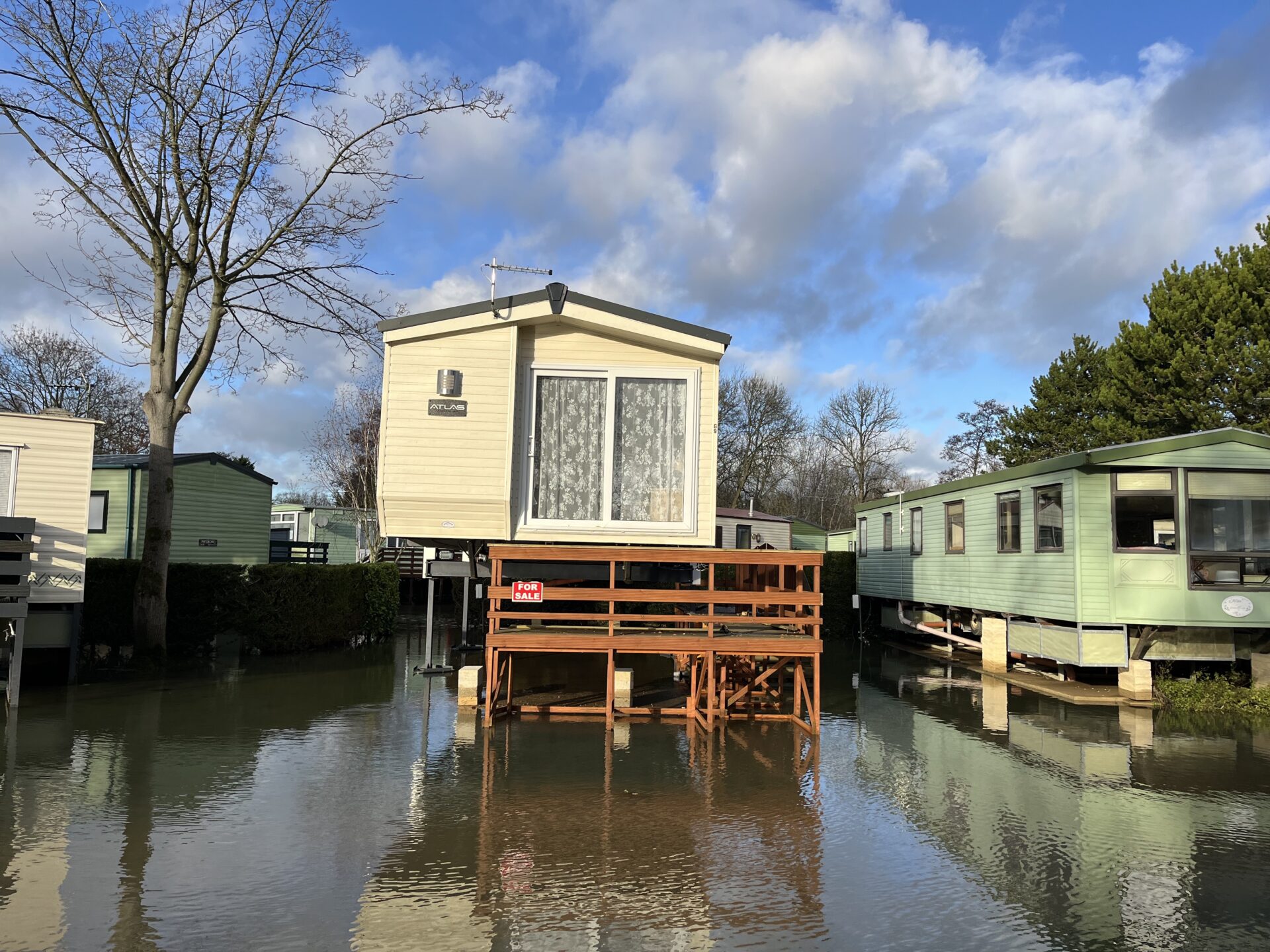
According to the latest academic research, Flood Technology Group’s award-winning Flood Adaptive Platform can ‘meaningfully reduce’ the environmental impact, economic loss and social harm caused by flooding in high-risk areas.
Conducted by the National Manufacturing Institute Scotland and the University of Sheffield’s Grantham Centre for Sustainable Futures, the Assessment of Impact analysed the broader environmental and socio-economic benefits of deploying the Flood Adaptive Platform within the UK’s residential and holiday park sector.
It found that the ground-breaking technology, which has won a string of regional and national awards since it was launched two years ago, ‘offers a practical and elegant solution to the growing risk facing the UK’s park home end holiday lodge sector’. With around 30 per cent of sites at risk and many properties lacking resilience measures, flooding increasingly threatens homes, livelihoods and community stability. According to the report outlining the findings of the research, residential park homes in the UK are often occupied by older people and financially vulnerable residents, so are ‘structurally fragile’ and can suffer ‘significant damage’ during flood events.
A life cycle assessment conducted as part of the research showed that the platform’s ‘embodied’ carbon (the greenhouse gas emissions associated with its entire life cycle and the materials within it) equates to 3.45 tonnes of carbon dioxide. In contrast, the baseline impact of just one typical flood event on a park home equates to 3.8 tonnes of carbon dioxide, demonstrating that the Flood Adaptive Platform reduces the overall carbon impact after just one incidence of flooding. In fact, conservative estimates suggest that the Flood Adaptive Platform could reduce carbon emissions by at least 7.95 tonnes over a 30-year period.
In addition to the environmental benefits, the research found that the platform is also capable of delivering ‘substantial social and economic value by reducing the mental health burden, displacement, uninsured losses and long recovery times that typically follow flooding’. As well as helping residential and holiday park home owners to access flood insurance, it ‘helps to safeguard peak season tourism income, reduce down-time for site operators and protects residents’ belongings’.
With average flood damage claims of £18,000 exceeding the typical (for a basic model) £12,000 installation cost, the report concludes that the system ‘presents a strong financial case, while also strengthening community resilience’.
Simon Gilliland, Chief Executive of Flood Technology Group, said: “Having spent more than a decade developing, testing and honing this unique technology before we began to bring it to market, we are acutely aware of its enormous potential to protect people, property and infrastucture across multiple sectors and on a global scale.
“We’re already experiencing significant demand for the Flood Adaptive Platform from UK residential and holiday parks, and this latest research by leading academics at the National Manufacturing Institute Scotland and the University of Sheffield offers yet more compelling evidence of the multiple benefits that it offers to these sectors.
“Park homes, static caravans and lodges are disproportionately located in areas of high flood risk, compared to conventional types of property but, by applying our technology to them, we can support the safe development of prime plots of land adjacent to bodies of water and in areas of flood risk. This is particularly important in flood-prone, riverside and coastal areas, where the impact on tourism hits business owners hard.”
